Blog

Introduction
Choosing between a hospital pharmacy and retail pharmacy career is one of the most significant decisions you'll make as a pharmacy professional. Both paths offer rewarding opportunities to impact patient care, but they differ dramatically in daily responsibilities, work environment, and career trajectory.
Whether you're a pharmacy student weighing your options or an established pharmacist considering a change, understanding these distinctions is crucial.
The good news? You don't have to choose just one. Many pharmacists today are exploring both environments through flexible PRN staffing opportunities, allowing them to build diverse experience and discover where they truly thrive.
Hospital Pharmacy: In-Depth Overview
Daily Responsibilities
Hospital pharmacists work in a clinical team environment, often collaborating directly with physicians, nurses, and other healthcare providers. Your daily responsibilities typically include:
Medication therapy management: Reviewing patient medication profiles, identifying drug interactions, and recommending adjustments to optimize therapy
IV admixture preparation: Compounding sterile medications and chemotherapy agents with precision and safety protocols
Clinical rounds: Participating in patient care discussions and contributing pharmaceutical expertise to treatment decisions
Drug information support: Answering clinical questions from healthcare team members
Inventory management: Overseeing medication supplies, automated dispensing systems, and controlled substance accountability
Work Environment
Hospital pharmacies operate in fast-paced, structured environments. You'll typically work scheduled shifts (which may include nights, weekends, and holidays), often as part of a larger pharmacy team. The atmosphere is clinical and protocol-driven, with strong emphasis on standardization and quality control.
Pros of Hospital Pharmacy
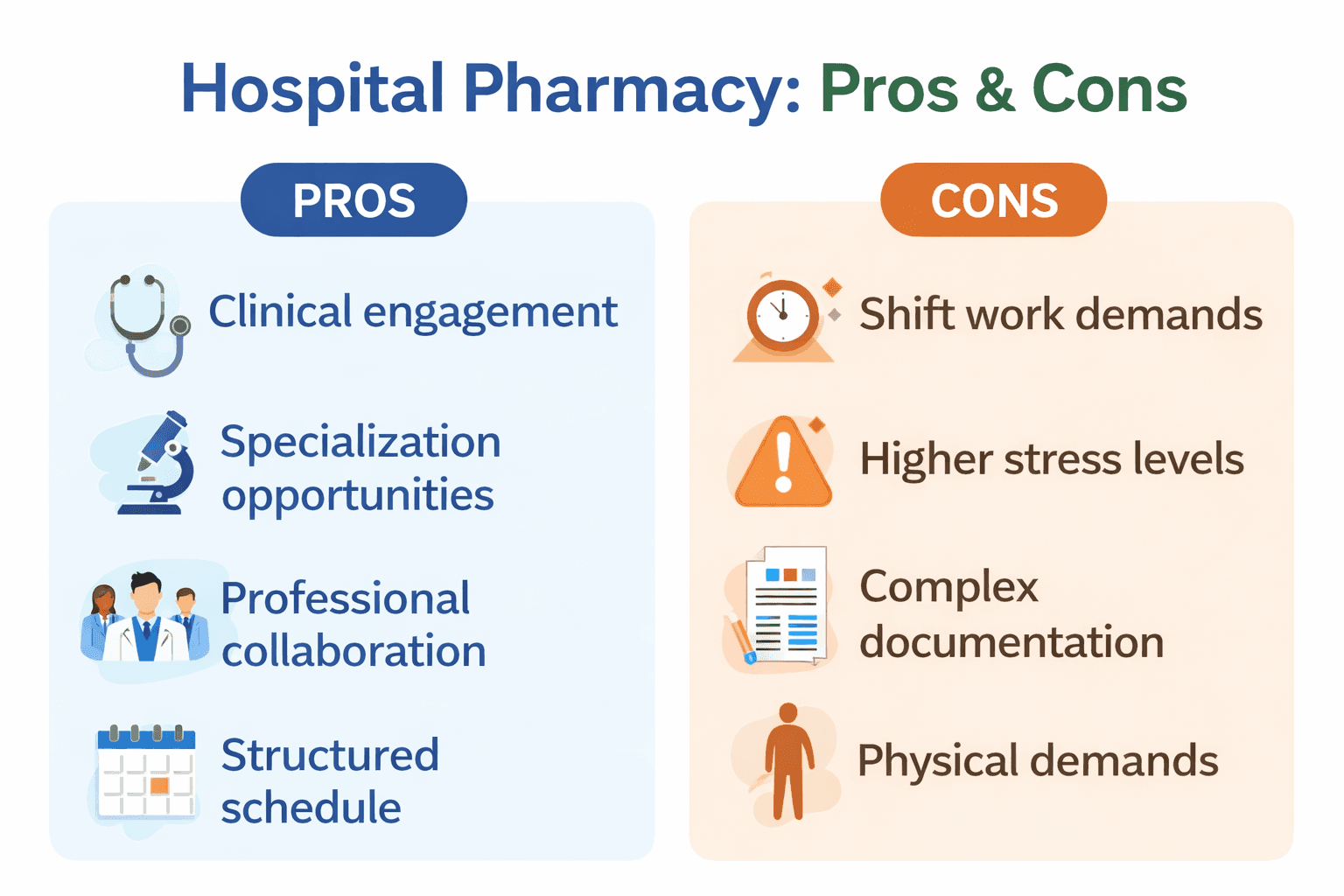
Clinical engagement: Direct patient care involvement and clinical decision-making
Continuing learning: Exposure to complex cases and latest clinical research
Specialization opportunities: Options to focus on oncology, critical care, infectious disease, or other specialty areas
Professional collaboration: Daily interaction with diverse healthcare professionals
Structured schedule: Predictable shifts (though may include nights/weekends)
Career advancement: Clear pathways to supervisory and leadership roles
Cons of Hospital Pharmacy
Shift work demands: Nights, weekends, holidays, and on-call responsibilities required
Higher stress levels: Managing critical patient situations with time-sensitive decisions
Limited patient relationships: Brief interactions focused on medication therapy rather than ongoing relationships
Complex documentation: Extensive charting and regulatory compliance requirements
Physical demands: Extended standing, repetitive tasks, and high-volume workdays
Retail Pharmacy: In-Depth Overview
Daily Responsibilities
Retail pharmacists serve as the medication experts in community pharmacy settings, managing both clinical and business operations. Your typical day includes:
Prescription verification and dispensing: Reviewing prescriptions for accuracy, interactions, and appropriateness
Patient counseling: Explaining medication use, side effects, and proper administration to patients
OTC recommendations: Helping customers select appropriate over-the-counter products
Insurance coordination: Processing claims and managing prior authorization requests
Staff supervision: Training and managing pharmacy technicians and interns
Inventory and business management: Monitoring stock levels and contributing to pharmacy profitability
Work Environment
Retail pharmacies operate in community settings (chain pharmacies, independent pharmacies, grocery stores, or clinics). The environment is customer-facing and often high-volume. You're frequently the most accessible healthcare professional to patients, making your role educational and consultative.
Pros of Retail Pharmacy
Patient relationships: Ongoing interactions with regular customers over time
Accessibility: Serving as a frontline healthcare resource for the community
Flexibility options: Many retail settings offer part-time or flexible scheduling
Direct patient counseling: Teaching moments and medication education opportunities
Business involvement: Understanding pharmaceutical operations and entrepreneurial aspects
Diverse patient populations: Exposure to various conditions and health needs
Cons of Retail Pharmacy
High prescription volumes: Managing large numbers of transactions daily, sometimes at the expense of clinical depth
Limited clinical involvement: Less opportunity for clinical decision-making compared to hospital settings
Customer service challenges: Managing difficult interactions and insurance-related frustrations
Staffing constraints: Often working short-staffed, leading to stress and burnout
Insurance complications: Spending significant time on prior authorizations and claim denials
Hospital vs Retail Pharmacy: Comparison Table
Factor | Hospital Pharmacy | Retail Pharmacy |
|---|---|---|
Average Salary | $135,000-$155,000 | $125,000-$145,000 |
Work Hours | Scheduled shifts (nights/weekends common) | Typically 40 hours (some flexibility) |
Patient Interaction | Clinical, brief, team-focused | Personal, ongoing, counseling-focused |
Clinical Involvement | High - medication therapy management | Moderate - verification & counseling |
Specialization | Oncology, critical care, infectious disease | Specialty pharmacy, immunizations |
Stress Level | High (critical decisions, emergencies) | High (volume, staffing, insurance) |
Team Environment | Large collaborative teams | Smaller teams with supervisor role |
Work-Life Balance | Challenging due to shift work | Better potential for flexibility |
Which Path Is Right for You?
Choose Hospital Pharmacy If You:
Thrive in fast-paced, clinical environments
Enjoy complex problem-solving and clinical decision-making
Prefer team-based collaboration with healthcare professionals
Are interested in specialization and advanced clinical practice
Are comfortable with shift work and varying schedules
Want to stay current with latest clinical research
Choose Retail Pharmacy If You:
Value building ongoing relationships with patients
Enjoy direct patient counseling and education
Prefer a more predictable, consistent schedule
Are interested in business operations or entrepreneurship
Want to be the accessible healthcare expert in your community
Appreciate variety in daily interactions and tasks
Explore Both Paths Through PRN Work
The beauty of modern pharmacy staffing is that you don't have to choose one path permanently. PRN (as-needed) pharmacy positions allow you to:
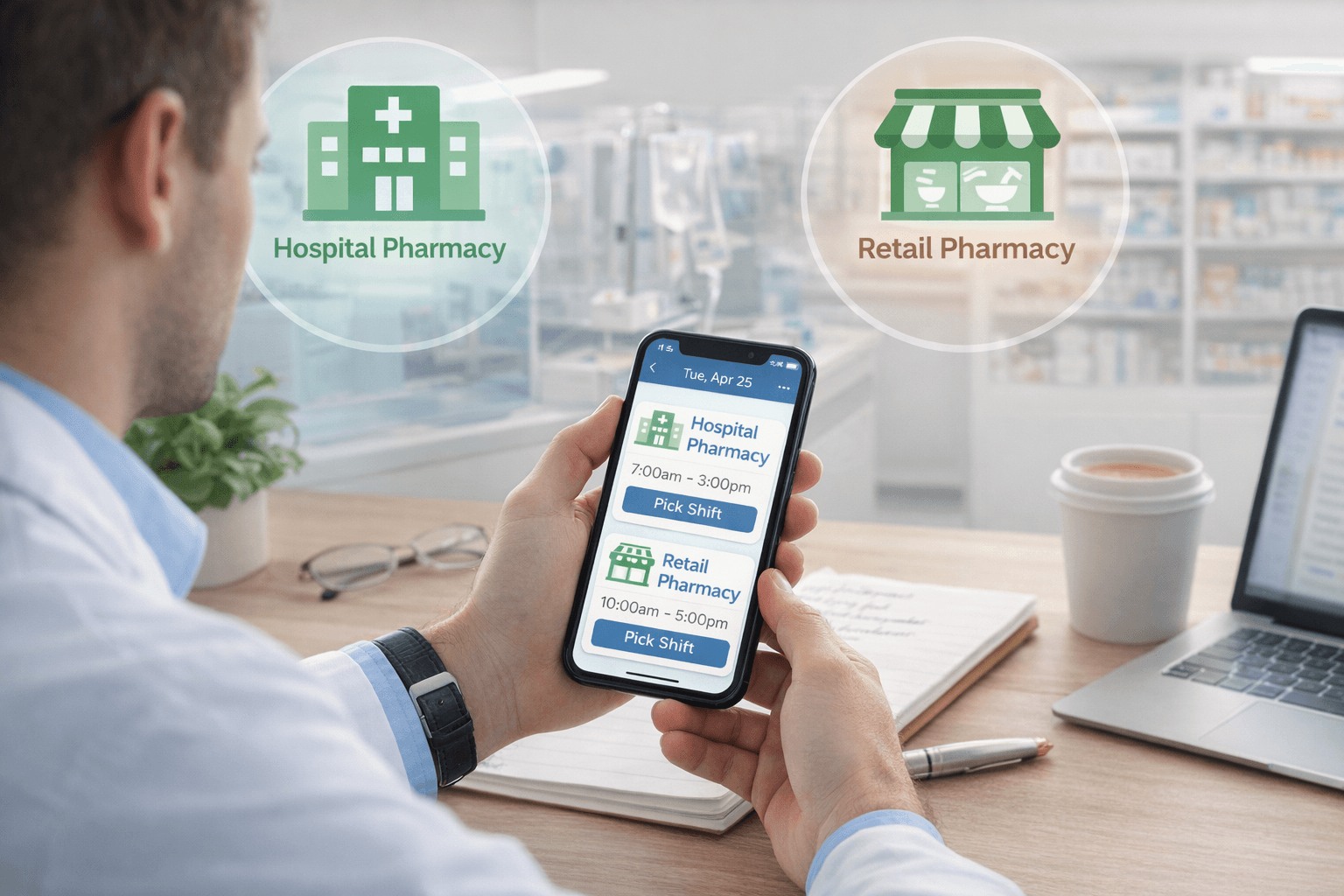
Test both environments: Work hospital shifts one week and retail shifts the next to determine where you're happiest
Build diverse clinical experience: Develop skills across different pharmacy settings
Maintain flexibility: Control your schedule while exploring options
Increase earning potential: Take additional shifts based on demand
Network broadly: Connect with professionals across different practice settings
Avoid burnout: Vary your work environment to prevent monotony
Many pharmacists use PRN work strategically—starting in hospital settings for clinical foundation, then transitioning to retail for better work-life balance, or vice versa. Others maintain both roles simultaneously, enjoying the variety and flexibility.
Start Exploring Your Pharmacy Career Path Today
Both hospital and retail pharmacy offer meaningful careers serving patients and your community. The right choice depends on your clinical interests, personality, and lifestyle preferences.
Rather than making assumptions about which setting suits you, why not explore both? ShiftRx connects pharmacy professionals with flexible PRN opportunities across hospital, retail, and specialty pharmacy settings. Find shifts that match your availability, test different environments, and build the pharmacy career that's right for you.
Ready to take the next step? Sign up with ShiftRx today and start picking shifts in the settings you want to explore.