Blog

Introduction
If you're a pharmacist exploring flexible work options, you've probably come across the terms "relief pharmacist" and "locum pharmacist" and wondered: are they the same thing? The short answer is mostly yes—but the nuances matter when you're searching for jobs, negotiating pay, or explaining your work arrangement to a new employer.
Whether you're burned out from a demanding staff position, looking to supplement your income, or simply want more control over your schedule, understanding these terms will help you navigate the growing world of flexible pharmacy work.
What Is a Relief Pharmacist?
A relief pharmacist is a licensed pharmacist who fills in for regular staff on a temporary basis. The term "relief" comes from the idea that you're providing relief to a pharmacy's existing team—covering sick days, vacations, peak seasons, or unexpected gaps in the schedule.
Relief pharmacists typically:
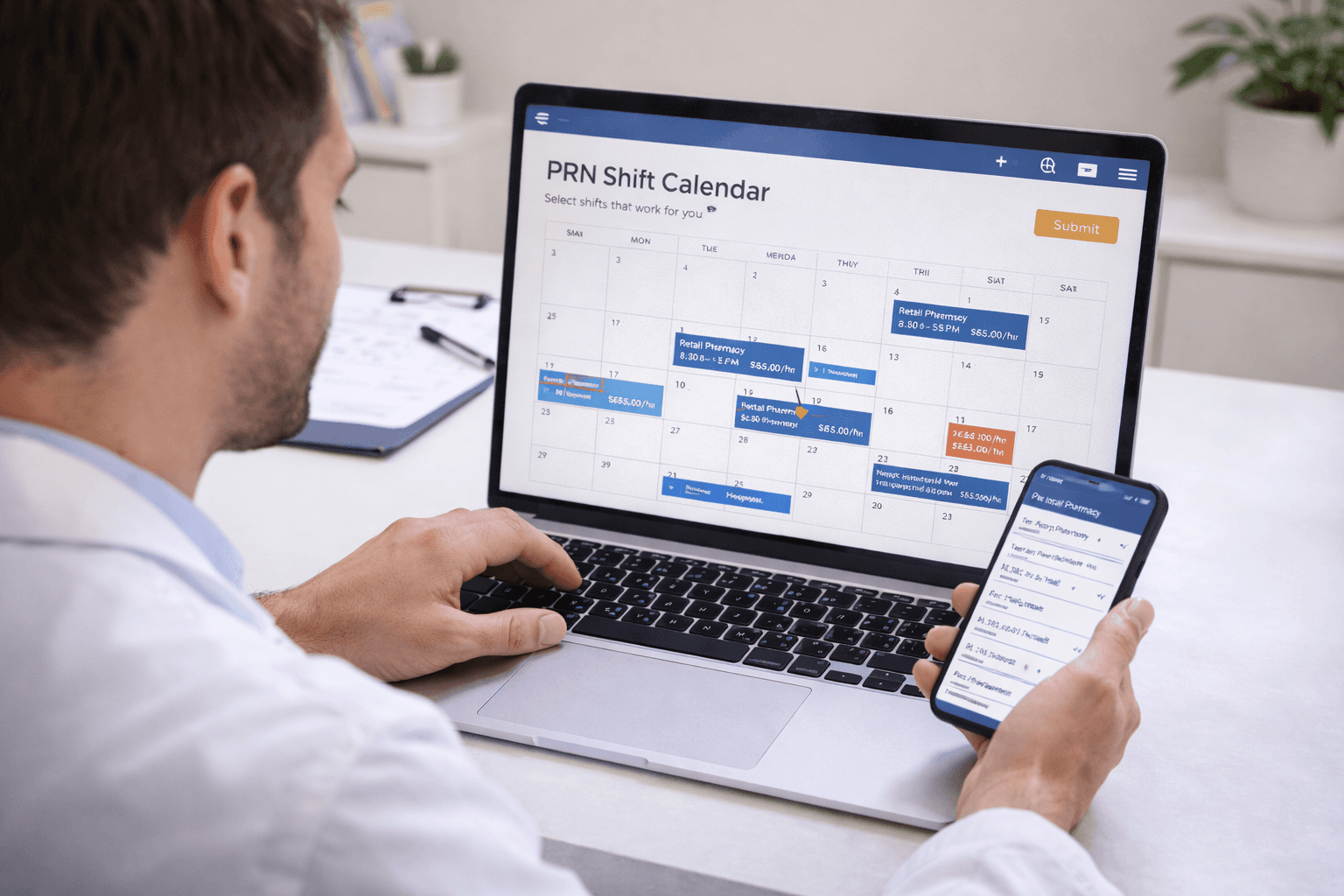
Work on a per-shift or per-day basis (often called "per diem" or "PRN")
Choose their own availability and accept shifts that fit their schedule
Work at multiple pharmacies rather than being tied to one location
Handle the same clinical and dispensing responsibilities as staff pharmacists
In the United States, "relief pharmacist" is the most common term you'll see in job postings, especially for retail and community pharmacy settings.
What Is a Locum Pharmacist?
"Locum" comes from the Latin phrase locum tenens, meaning "to hold the place of." A locum pharmacist is essentially a temporary replacement—someone who steps in to maintain continuity when a permanent pharmacist is unavailable.
The term "locum" is more commonly used in:
The United Kingdom, Australia, and other Commonwealth countries
Hospital and health-system pharmacy settings in the US
Formal staffing agency contracts
In practice, a locum pharmacist does the same work as a relief pharmacist. The difference is primarily linguistic and regional. If you're searching for flexible pharmacy jobs in the US, you'll have better luck searching for "relief pharmacist," "per diem pharmacist," or "PRN pharmacist" rather than "locum."
Relief vs Locum vs Per Diem vs PRN: A Quick Comparison
Term | Common Usage | Typical Setting | Contract Length |
|---|---|---|---|
Relief pharmacist | United States | Retail, community, chain pharmacies | Per shift or per day |
Locum pharmacist | UK, Australia, US hospitals | Hospitals, health systems, specialty | Days to weeks |
Per diem pharmacist | United States | All settings | Per day ("per diem" = "per day" in Latin) |
PRN pharmacist | United States | Hospitals, health systems | As needed ("PRN" = "pro re nata" in Latin) |
The key takeaway: these terms all describe pharmacists who work on a flexible, temporary basis rather than in a permanent staff position. The terminology varies by region, setting, and employer preference—but the work is fundamentally the same.
Why Pharmacists Choose Relief and Locum Work
The pharmacy profession is facing significant challenges. According to the National Community Pharmacists Association, 70% of pharmacies are experiencing staffing shortages, and pharmacist burnout rates have reached alarming levels. In this environment, many pharmacists are rethinking the traditional staff model.
Here's why flexible work is gaining momentum:
Schedule control
Relief pharmacists choose when and where they work. If you need to avoid weekends, work only mornings, or take a month off, you have that freedom.
Higher hourly rates
Per diem and relief rates are typically 20-40% higher than staff hourly equivalents. In 2025, per diem pharmacist rates ranged from $60-$70 per hour in many markets, with some specialty and hard-to-fill shifts paying even more.
Variety and skill development
Working across multiple pharmacies exposes you to different systems, patient populations, and workflows. Many relief pharmacists find this variety keeps the work interesting and sharpens their adaptability.
Burnout recovery
For pharmacists leaving demanding staff roles, relief work offers a way to stay in the profession without the 50-hour weeks, mandatory overtime, and administrative burden that contribute to burnout.
Supplemental income
Some pharmacists maintain a part-time staff position while picking up relief shifts for extra income. Others use relief work to bridge gaps between full-time roles.
How Much Do Relief and Locum Pharmacists Make?
Pay varies significantly based on location, setting, and urgency of the shift. Here are general ranges as of early 2026:
Retail/community pharmacy relief:
$55-$70 per hour (standard shifts)
$70-$85 per hour (weekends, holidays, last-minute fills)
Hospital/health-system PRN:
$60-$75 per hour (standard)
$75-$90+ per hour (specialty, overnight, hard-to-fill)
Locum tenens (travel/extended contracts):
$65-$85 per hour base, plus housing and travel stipends for multi-week assignments
The trade-off for higher hourly rates is the lack of benefits. Relief pharmacists typically don't receive health insurance, PTO, or retirement contributions from the facilities where they work. Many offset this by factoring benefits costs into their rate requirements or securing coverage through a spouse, the ACA marketplace, or professional associations.
How to Find Relief Pharmacist Jobs
The traditional path to relief work was through staffing agencies, which take a cut of your pay in exchange for finding and managing placements. While agencies still play a role—especially for extended locum contracts—new platforms are changing the game.
Direct-hire platforms
Platforms like ShiftRx connect pharmacists directly with pharmacies, cutting out the agency middleman. You sign up, set your availability, and get matched with shifts based on your license, location, and preferences. The result: higher take-home pay and more control over your schedule.
Staffing agencies
Traditional agencies like Rx relief, HCC Pharmacy Staffing, and RPh on the Go still handle a significant portion of relief placements, particularly for hospitals and travel assignments. They're worth considering if you want someone else to handle the logistics.
Direct outreach
Some pharmacists build their own network by reaching out directly to pharmacy managers. This works best in smaller markets or once you've established a reputation.
Job boards
Indeed, LinkedIn, and pharmacy-specific job boards list per diem and PRN positions. Search for "per diem pharmacist," "PRN pharmacist," or "relief pharmacist" plus your location.
Is Relief or Locum Work Right for You?
Flexible pharmacy work isn't for everyone. Consider these questions:
Do you thrive with variety, or do you prefer routine? Relief work means adapting to new environments, systems, and teams regularly. If you find that energizing, you'll do well. If you prefer deep relationships with coworkers and patients, a staff role might be a better fit.
Can you handle income variability? Shift availability fluctuates with demand. Some weeks you'll have more offers than you can accept; other times, shifts may be scarce. Financial planning and an emergency fund are essential.
Are you comfortable advocating for yourself? Relief pharmacists negotiate their own rates, manage their own taxes (often as 1099 contractors), and handle their own benefits. If you prefer an employer to manage these details, consider hybrid arrangements or part-time staff roles.
Do you have the required credentials? Relief pharmacists need an active license in the state(s) where they work, current immunization certifications (in most states), and often a clean background check. Some platforms and agencies handle credentialing; others require you to maintain everything independently.
The Bottom Line
Relief pharmacist and locum pharmacist are essentially the same thing: a licensed pharmacist working temporary, flexible shifts rather than a permanent staff position. The terminology varies by region and setting, but the opportunity is the same—more control, often higher pay, and freedom from the traditional employment model.
If the pharmacy staffing shortage has taught us anything, it's that facilities need flexible talent, and pharmacists want flexible options. Whether you call it relief, locum, per diem, or PRN, this is one of the fastest-growing segments of the pharmacy workforce.
Ready to find your next shift?
ShiftRx connects pharmacists and pharmacy technicians with PRN shifts and full-time roles across all 50 states. Set your availability, get matched with opportunities, and take control of your pharmacy career.