Blog
Key Takeaways
70% of pharmacies are experiencing staffing shortages according to the NCPA
Pharmacy school enrollment dropped over 60% from 2011 to 2021
89% of pharmacists report high risk of burnout
Solutions exist for both facilities (flexible staffing, technology) and professionals (schedule control, career development)
Introduction: The State of Pharmacy Staffing in 2026
The pharmacy staffing shortage has reached crisis levels. According to the National Community Pharmacists Association (NCPA), 70% of pharmacies are struggling to fill crucial roles, and the problem continues to intensify. The National Center for Healthcare Workforce Analysis projects a shortage of nearly 5,000 pharmacists over the next 15 years—but many in the industry believe that figure dramatically underestimates the challenge.
This isn't a temporary blip. It's a structural shift that demands new approaches from both healthcare facilities and pharmacy professionals. Understanding the causes, impact, and available solutions is essential for navigating the evolving pharmacy landscape.
What's Causing the Pharmacy Staffing Shortage?
Declining Pharmacy School Enrollment
The pipeline of new pharmacists is shrinking dramatically. Pharmacy school enrollment peaked at 106,815 students in fall 2011. By 2021, enrollment had plummeted to 40,552, a decline of more than 60% in less than a decade.
This collapse reflects multiple factors: concerns about job market saturation in the early 2010s, rising educational costs (PharmD programs often exceed $150,000), and shifting perceptions of pharmacy as a career path. The result is a generation gap that will take years to correct.
Burnout and Workforce Attrition
The pharmacists who remain in the profession are under immense pressure. Research indicates that almost nine out of ten (89%) pharmacists are at high risk of burnout.
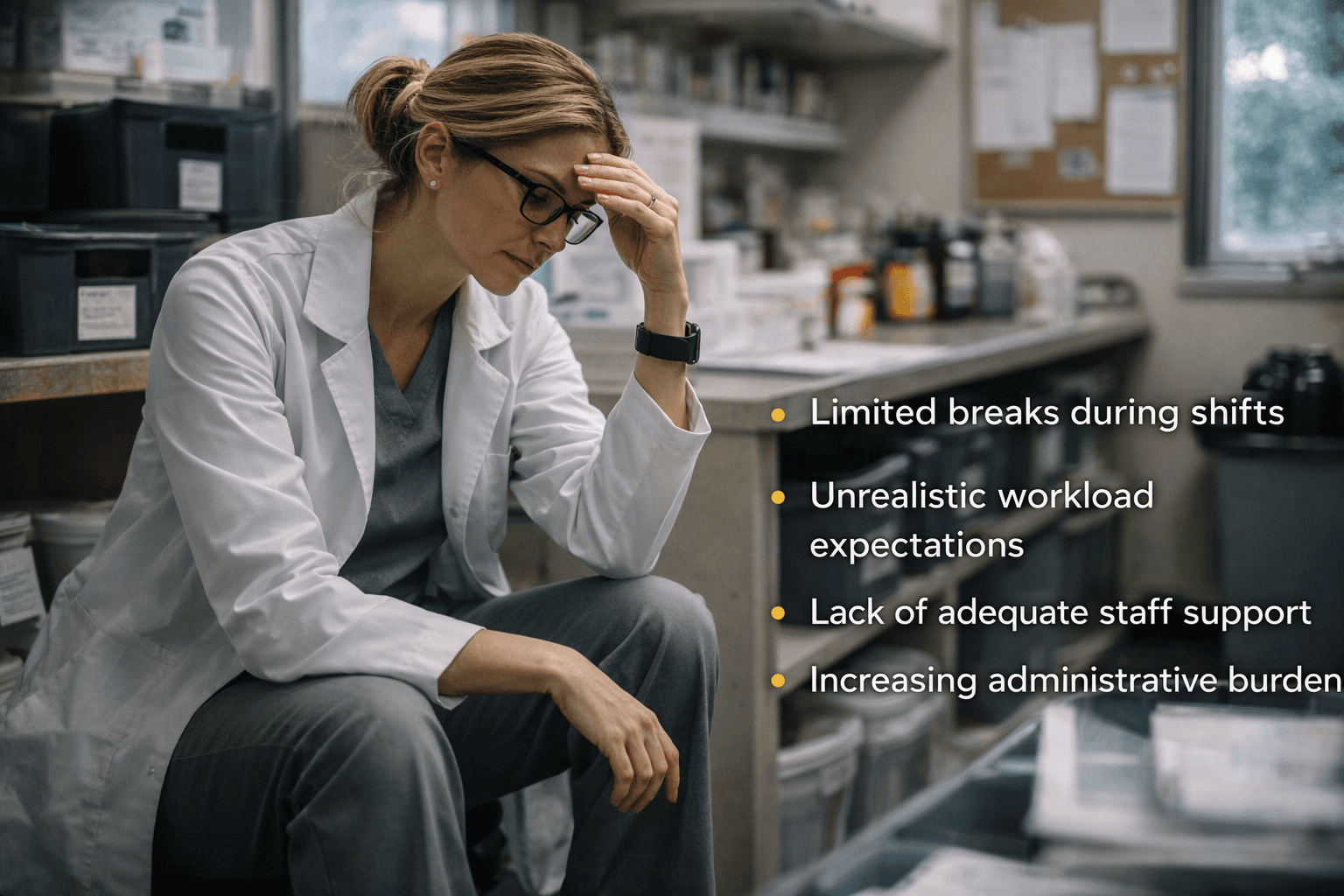
When pharmacists burn out, they don't just slow down—they leave. Many exit the profession entirely, pursue non-clinical roles, or reduce their hours to part-time. This attrition compounds the shortage created by declining enrollment.
Pandemic Aftermath
COVID-19 accelerated existing trends. Pharmacists took on expanded responsibilities such as vaccinations, testing, public health education while facing understaffed conditions and heightened personal risk. The pandemic trauma pushed many pharmacists toward early retirement, career changes, or reduced clinical involvement.
Systemic Industry Pressures
Retail pharmacy consolidation, insurance reimbursement pressures, and corporate cost-cutting have created difficult working conditions. Many pharmacy positions now require doing more with less like higher prescription volumes, expanded clinical services, and administrative tasks without proportional staffing increases.
The Impact of the Pharmacy Staffing Shortage
Patient Care Consequences
Understaffed pharmacies create patient safety risks. When pharmacists are rushed, medication errors increase. When patient counseling time is cut short, adherence suffers. When prescriptions take longer to fill, patients may delay or abandon necessary treatments.
The irony is stark: in an effort to cut costs through reduced staffing, healthcare systems may create far more expensive problems through preventable adverse events and poor outcomes.
Operational Strain
For pharmacy managers, chronic understaffing creates operational chaos:
Last-minute call-outs become crises
Remaining staff face unsustainable workloads
Quality metrics suffer
Employee satisfaction and retention decline
Costs increase through overtime, agency fees, and turnover
Pharmacist Wellbeing
For individual pharmacists, working in understaffed conditions takes a personal toll. Extended hours, missed breaks, constant pressure, and the weight of patient safety responsibility create stress that follows them home. The profession that attracted them, the opportunity to help patients and apply clinical expertise, becomes unrecognizable.
Solutions for Pharmacy Facilities
Embrace Flexible Staffing Models
Traditional all-full-time staffing models are increasingly unsustainable. Forward-thinking facilities are adopting hybrid approaches:
Core full-time staff for baseline operations and institutional knowledge
PRN (as-needed) professionals to handle variable demand, peak periods, and coverage gaps
Float pools to provide coverage across multiple locations
This flexibility reduces the burden on permanent staff while ensuring adequate coverage. Platforms like ShiftRx make it easy to connect with qualified PRN pharmacists and technicians who can fill shifts on short notice.
Invest in Technology and Automation
Technology can't replace pharmacists, but it can reduce administrative burden and free pharmacists to focus on clinical work. Consider:
Automated dispensing systems
Medication synchronization programs
Prior authorization automation
Inventory management technology
Telepharmacy solutions for verification and consultation
These investments improve efficiency without adding headcount, allowing existing staff to work at the top of their license.
Prioritize Retention
In a shortage market, retaining current staff is more cost-effective than recruiting replacements. Focus on:
Competitive compensation (benchmark regularly)
Reasonable workload expectations
Professional development opportunities
Flexible scheduling options
Positive workplace culture
Career advancement pathways
Small investments in retention pay significant dividends when turnover costs $15,000-$30,000 per pharmacist.
Build Relationships with Pharmacy Schools
Partner with local pharmacy schools for internship programs, residency opportunities, and recruitment pipelines. Interns who work throughout pharmacy school are more likely to apply for positions at those facilities after graduation.
Solutions for Pharmacy Professionals
Explore Flexible Work Arrangements
You don't have to accept an unsustainable full-time position. PRN and per diem pharmacy work offers:
Schedule control: Choose when and where you work
Higher hourly rates: PRN rates typically exceed full-time hourly equivalents
Variety: Work across different settings and avoid monotony
Burnout prevention: Control your workload and maintain work-life balance
Platforms like ShiftRx connect pharmacists with flexible opportunities across retail, hospital, and specialty settings, allowing you to build a career that works for your life.
Advocate for Your Profession
Pharmacists are increasingly advocating for systemic change:
Support state legislation for safe staffing ratios
Participate in professional organizations pushing for practice reform
Document unsafe conditions and escalate through appropriate channels
Mentor new pharmacists and support pipeline development
Invest in Your Career Development
Specialization creates options. Board certifications, advanced training, and specialty expertise make you more valuable and provide leverage in negotiating better working conditions. Consider:
Board certifications (BCPS, BCOP, BCACP, etc.)
Specialty training in high-demand areas
Leadership and management development
Emerging practice areas (telepharmacy, specialty pharmacy, clinical services)
Prioritize Your Wellbeing
No job is worth your health. If your current position is unsustainable:
Set boundaries around hours and workload
Use available PTO and sick time
Seek support for stress and burnout
Consider alternative arrangements (part-time, PRN, different settings)
Know that other options exist
How ShiftRx Addresses the Pharmacy Staffing Shortage
ShiftRx was built to solve the pharmacy staffing crisis from both sides.
For Facilities
ShiftRx connects pharmacies with a network of over 10,000 vetted pharmacists and pharmacy technicians across all 50 states. Our platform enables you to:
Fill urgent shifts in hours, not days or weeks
Access qualified professionals without traditional agency markups
Build relationships with PRN staff who may become permanent hires
Maintain operations during staffing challenges
Scale flexibly with demand
For Professionals
ShiftRx gives pharmacy professionals control over their careers:
Browse and select shifts that fit your schedule
Earn competitive PRN rates (often higher than staff positions)
Work across multiple settings and locations
Maintain flexibility while building your income
Avoid the burnout of unsustainable full-time positions
The staffing shortage isn't going away, but how we respond to it is within our control. ShiftRx is helping facilities and professionals navigate this new reality together.
Conclusion
The pharmacy staffing shortage is a complex challenge with no single solution. But by understanding the causes and embracing new approaches—flexible staffing, technology investment, retention focus, and professional advocacy—both facilities and pharmacists can thrive in this evolving landscape.
The old model of rigid full-time employment and chronic understaffing benefits no one. The new model is flexible, technology-enabled, and focused on sustainability and offers a path forward for the entire profession.
Ready to explore a better approach to pharmacy staffing?
For facilities: Find qualified pharmacy staff on ShiftRx
For professionals: Browse pharmacy shifts near you